Credit: Curious Appetite
To many outside Italy, it’s “parmesan cheese”, something you grate over the top of a plate of pasta. In Italy, it’s an icon, a way of life, a centuries-old craft of traditional Italian cheese-making. Parmigiano Reggiano is a protected and revered cultural artifact that reveals much about the Italian food system, Italian culinary traditions, and regional food culture.
The simplicity of the globally recognizable wheels of this cheese veil a vast Parmigiano Reggiano production process that is deeply connected to the region where it has been made for nearly a thousand years and tight DOP certification standards in Italy that protect the craft from dilution.
As always, one of the best ways to better understand the depth of the Italian traditions that make up this iconic food product is to do an authentic Parmigiano Reggiano tasting experience in Italy – where you experience not just the flavor, but also the sound, smell, terrain, dedication, and time involved.
We consulted our team of certified expert local guides who lead our food tours of Bologna and our gourmet tours of the surrounding Food Valley. With our guide’s immense knowledge vault, this article helps break down what makes understanding “authentic” crucial in choosing the right parmigiano-reggiano. Grab a drink of choice and get the formaggio breakdown from the pros!
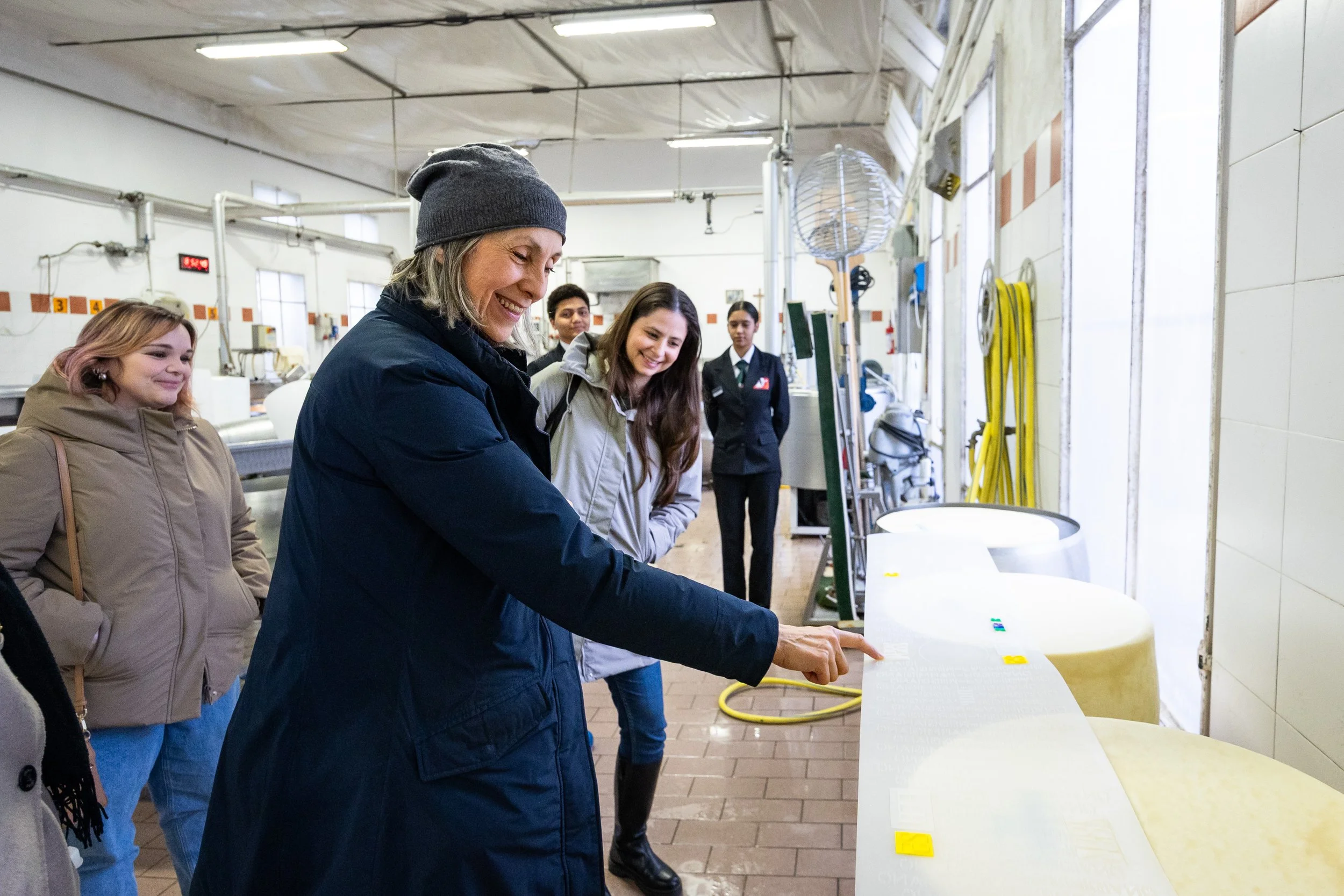
photo credit: Curious Appetite
Why is Parmigiano Reggiano such a big deal, why can’t I call it parmesan?
Parmigiano Reggiano is a DOP product – “protected designation of origin” – which means its production is highly regulated by a consortium to ensure the certified authenticity of the product – even the diet of the cows is strictly controlled. Essentially, if you make a similar cheese in any other place with some additional ingredients, it cannot be called Parmigiano Reggiano.
Parmigiano Reggiano is produced in five provinces within the Emilia-Romagna region, in a very small area situated between two rivers: the Reno, which flows west of Bologna, and the Po.
These provinces include Reggio Emilia, Bologna, Mantova, Parma, and Modena. The 281 dairies as of 2026 that are registered to produce the cheese make up the Consorzio (consortium) del Parmigiano Reggiano, tasked with authenticating, quality control and representing all the Parmigiano Reggiano producers under the DOP umbrella.
For example, if you are abroad and find a cheese just called “parmesan,” chances are it’s not going to be real deal, bonafide Parmigiano Reggiano. Within Italy, names matter! Not all cheeses cheese the same.
Confusion also arises from the difference between Parmigiano Reggiano and Grana Padano, which might seem similar but they are two distinct products. Ask any Italian and they will give you a seminar on the matter!
The biggest differences are the area of origin and ingredients. Grana Padano is also a DOP product but its designation of origin is vastly larger, comprising five regions in the North, including Emilia-Romagna.
Because the raw ingredients are sourced more broadly, the product requires the use of a preservative. Parmigiano Reggiano, on the other hand, is made with no preservatives or additives – just milk, salt and rennet.
So, how do you determine whether the cheese before you is in fact a certifiable legit Parmigiano Reggiano?
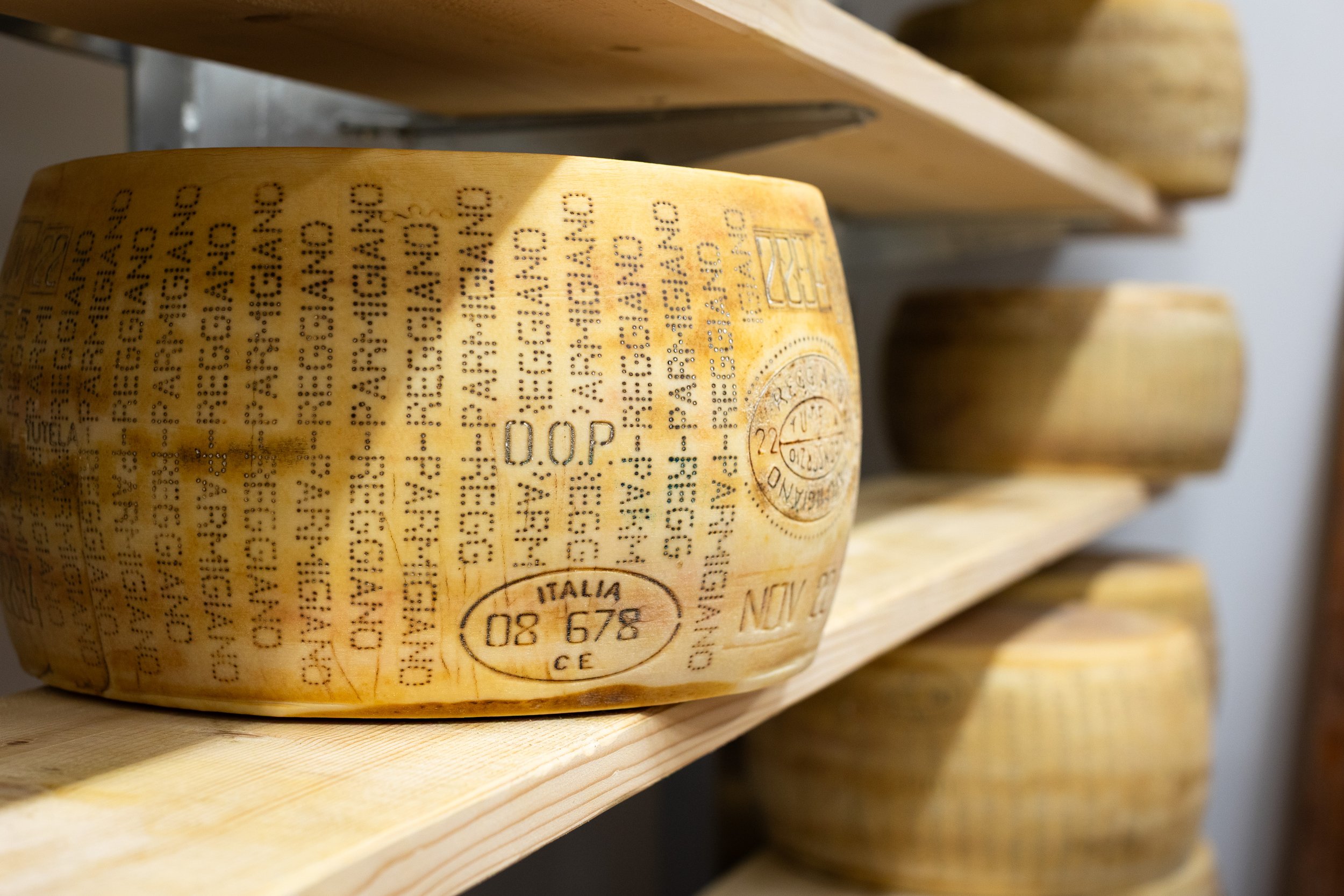
There’s a few ways to identify this. The crust of a wheel of Parmigiano Reggiano is like its “identity card.” It will be stamped with the month of production, the dairy where it was made, and of course the words Parmigiano Reggiano repeated around the wheel and the DOP mark. Buying chunks cut from a wheel make it easiest to identify this.
On the day the cheese is made, a small casein plaque—like a tiny edible tag—is also applied to the wheel. Today it includes a QR code that allows you to trace everything: where the milk came from, who produced it, and the exact day it was made. The level of traceability is extremely precise.
Visiting a production facility on a Emilia-Romagna Food Valley Tour can give you a greater appreciation for the attention and craft that goes into producing one of the most recognizable cheeses in the world.
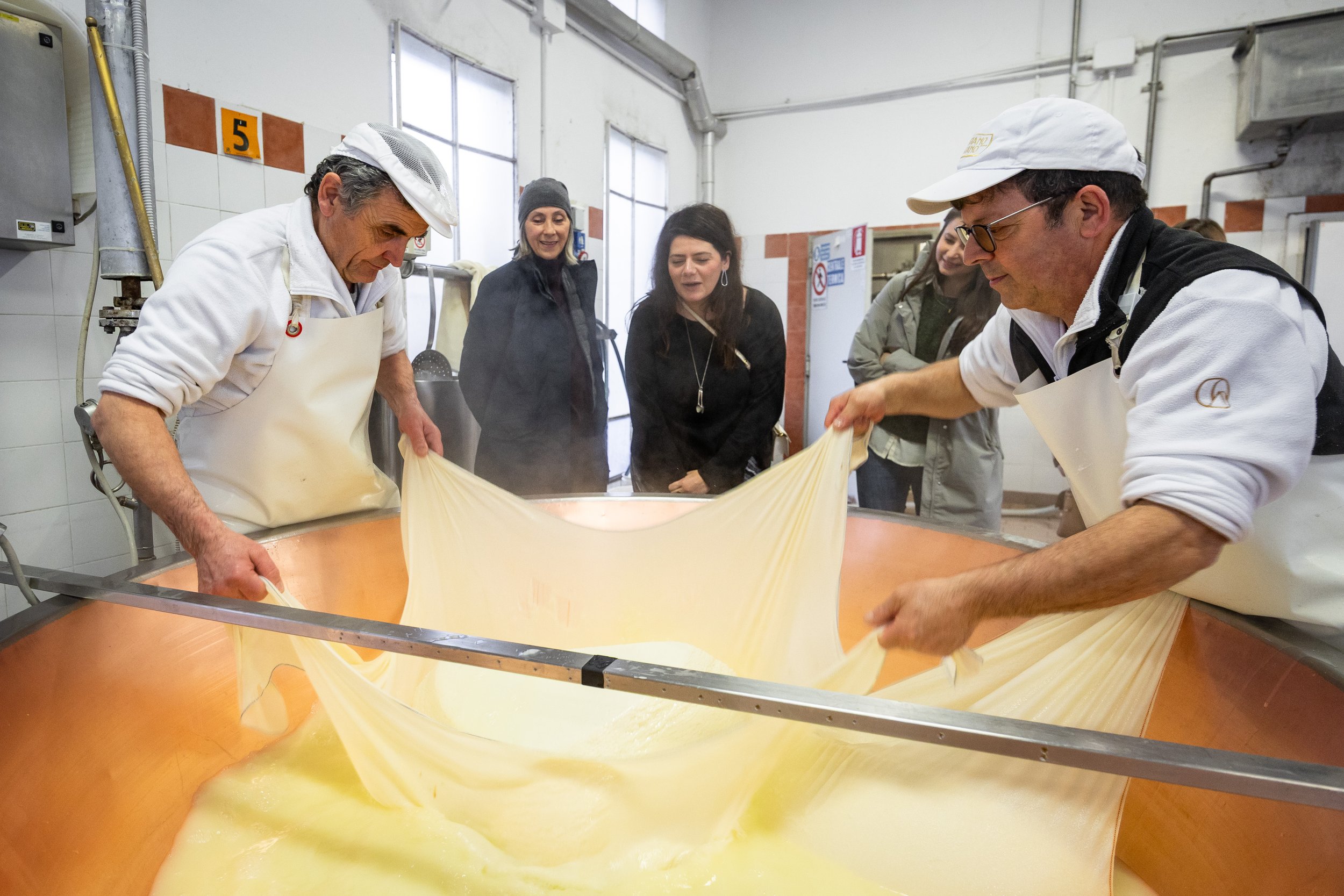
photo credit: Curious Appetite
How do Italians actually eat Parmigiano Reggiano?
There are four stagionature – “ages” – of Parmigiano Reggiano: 12, 18, 24 and 30 months. The difference is in the flavor, with a 12-month parmigiano being milder and a 30-month one being deeper in flavor.
In any case, if certifiably legit from a quality dairy, any age of Parmigiano Reggiano is delicious – even a 12-month one – because the level of quality control applied throughout the production. Often it’s just a matter of taste preference or what you’re using it for.
There are, as is always the case in Italy, some guidelines to follow when using Parmigiano Reggiano. It is not added indiscriminately to any dish. It is like a seasoning, used to enhance the flavors where necessary.
Generally, if not provided with your meal, don’t ask for it. It’s almost never paired with fish traditionally because Italians find cheese to be too strong for delicate fish.
Even some traditional dishes in the region don’t require adding it. For many, adding parmigiano over a bowl of tortellini in brodo, for example, is out of the question, as the grated cheese will make the dish inquinato (polluted) or sporco (dirty), covering the flavor of the delicate, painstakingly made broth.
It’s always important to remember Italians have a high degree of respect for chefs – what they make is sacrosanct and shouldn’t be modified unless overtly indicated.
Although some places will leave little bowls of pre-grated cheese – not always pure Parmigiano Reggiano – on the table for pasta dishes, in Emilia-Romagna, out of pride for the local product, waiters will hand grate this umami-rich aromatic formaggio tableside until you say basta.
In bars in Italy, you might also find chunks of cheese on taglieri (charcuterie boards) or aperitivo platters, and here’s the real test of whether you can identify a true Parmigiano Reggiano: taste.
The texture is going to be grainy, not smooth, and have little white crystals called tyrosine crystals, which are formed during the aging process, thus the longer it has aged, the more salty umami-laden crystals you’ll find and the more depth of flavor it will have.
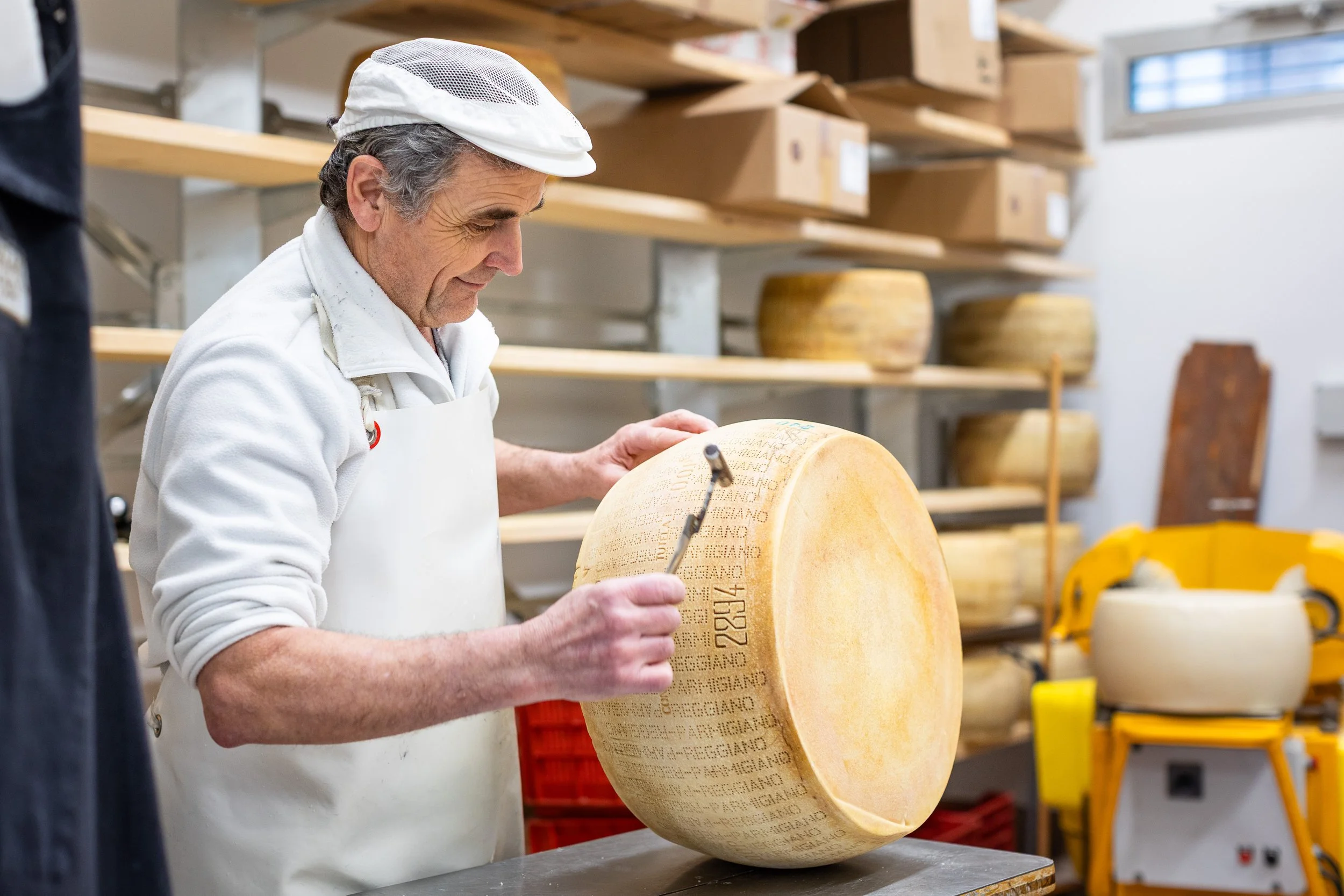
photo credit: Curious Appetite
Parmigiano Reggiano connoisseurs: masters of sound
The process of verifying whether a wheel meets the required standards of quality is done by cheese masters with a wealth of experience – and a really good ear.
Yes, that’s right, ear, not nose or tastebuds.
During aging, they carry out what’s called a battitura, or hammer test, tapping the wheels with a special hammer tool. The sound that reverberates tells them what sort of internal structure has been formed, the number of air pockets, and whether there are any defects.
If there are any small defects, the wheel is demoted from “scelto” to “mezzano” and demoted with long lines across the branding on the crust. These wheels however maintain their flavor and are still sold as is.
If the defects run deeper, altering the flavor or texture, the wheel is considered “sbiancato” and it is stripped entirely of its Parmigiano Reggiano DOP status, often used for grated mixes you can find at the supermarket.
This level of skill was the source of inspiration for an exhibition at the most recent Design Week in Milan: “I Suoni della Materia” and “Nuove forme di grandezza” by Parmigiano Reggiano at the University of Milan.
The immersive installation was curated by Paola Navone, who said, “We’ve always eaten Parmigiano Reggiano, but we aren’t truly aware of all the complexity behind it.”
Visitors entered a wheel-shaped space, where they could experience what it’s like to “hear” the complex orchestration involved in producing a wheel of Parmigiano Reggiano. The installation also highlighted the iconic form of the wheel, as well as the design of the most important tools in the production process, like the cheese knife or the stool on which the wheels rest when checked.
"Through an interactive system, gestures of visitors activate layers of sounds, from natural sounds to musical arpeggios, transforming the environment into a collective orchestra. Matter becomes rhythm and vibration, demonstrating how the collaboration of everyone involved in producing the DOP product can amplify the greatness of a product that is, in itself, a living material," explain the curators.
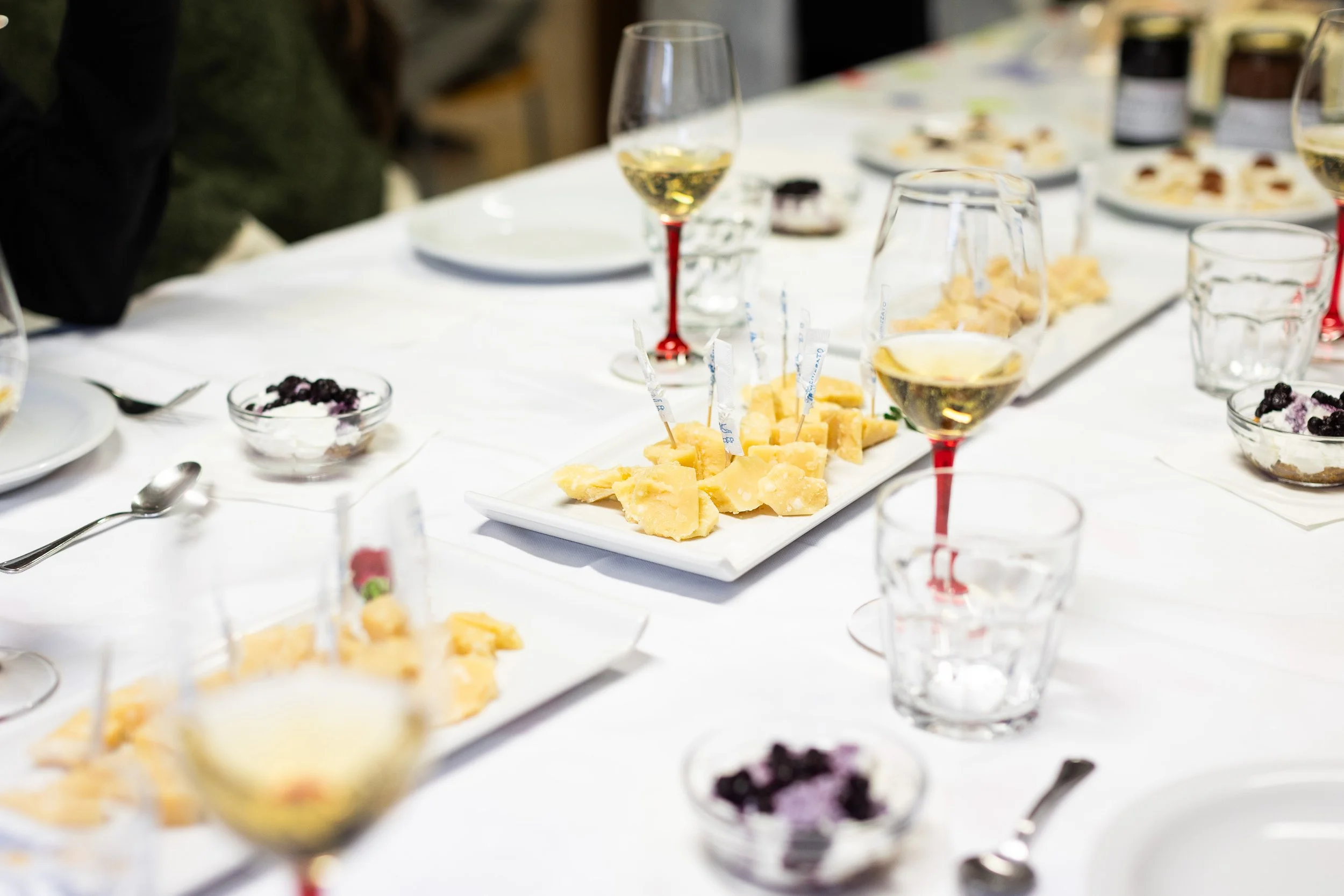
photo credit: Curious Appetite
What you get from a Parmigiano Reggiano Food Tour
The best way to experience this unique part of Parmigiano Reggiano production is on a guided tour like our Bologna Gourmet Food Tour or Emilia-Romagna Food Valley Tour.
You will learn even more about how to recognize genuine Parmigiano Reggiano and how to read the labels as well as get guided tastings of different ages not always offered to the public.
With so many dairies – 281! – in the consortium, we take the worry out of selecting the best dairies and cheese makers to introduce you too, and our close relationships with those in the industry give you insider access you wouldn’t otherwise find on your own.
We visit exceptional cheese factories that we wouldn’t call factories as we researched high and low to local small producers who make this cheese in smaller quantities resulting in a more distinctive wheel of parmigiano reggiano.
In addition to tastings, our parmigiano and balsamic vinegar tour allows you behind the scenes, to see how the cheese is made, aged, and tested – including the chance to experience the battitura in person, to hear for yourself what a Parmigiano Reggiano cheese wheel drums like.
We make the logistics simple, so you have more time to enjoy the parmigiano and maybe a glass (or two) of fizzy Pignoletto or Lambrusco.